When working with digital images, one of the most frequently asked questions is: which image format does not support transparency? This question is especially important for designers, developers, and content creators who deal with logos, overlays, UI elements, and web graphics.
Transparency in images refers to the ability of certain areas of an image to be invisible, allowing backgrounds or other layers to show through. This feature is essential in modern design systems because it enables clean layouts, smooth layering, and professional-looking visuals.
However, not all image formats are built to handle transparency. Some formats were designed long before transparency became a standard requirement in digital design. As a result, they simply ignore or remove any transparent data when saving the file.
This is where confusion often happens. Many beginners try to save a logo or cut-out image in the wrong format and end up with a solid white or colored background. The reason behind this is simple: the chosen format does not support transparency.
In this complete guide, we will clearly explain which image format does not support transparency, why this limitation exists, and how different formats behave in real-world use cases. We will also compare popular formats such as JPEG, PNG, GIF, and WebP to help you determine which is best for your specific needs.
By the end of this article, you will not only know the answer to which image format does not support transparency, but also understand how to choose the right format for web design, branding, and digital content creation without making common mistakes.
Which image format does not support transparency?
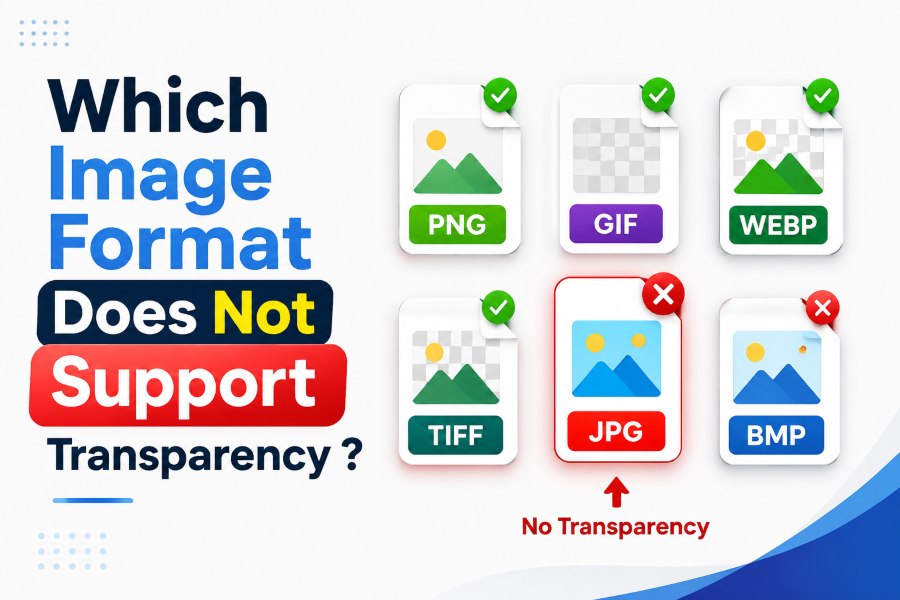
The image format that does not support transparency is JPEG (JPG). It does not include an alpha channel, which is required to store transparent pixels. As a result, any transparent background is automatically replaced with a solid color when saved as a JPEG. This is why PNG or WebP is used for logos, icons, and graphics that need transparency.
Why can JPEG Cannot Support Transparency in Digital Images?
When exploring which image format does not support transparency, the most common and correct answer is JPEG (JPG). This format was originally designed for storing and sharing photographs efficiently, not for handling advanced graphic features such as transparency.
JPEG uses a lossy compression method that reduces file size by permanently removing certain image data. This makes JPEG extremely effective for storing high-quality photos in smaller file sizes, but it also introduces a major limitation: it cannot store an alpha channel, which is required for transparency.
The alpha channel is what allows parts of an image to appear fully transparent or partially visible. Without it, every pixel in a JPEG image must remain fully visible. As a result, any transparent areas are automatically replaced with a solid background color, such as white or black, when the file is saved.
This limitation is not a technical error but a design decision. JPEG was developed during a time when internet speed, storage capacity, and processing power were limited. At that time, priorities focused on compressing images efficiently rather than on supporting modern design needs such as layering or transparency.
Because of this design, JPEG became widely used in digital photography, on websites, and on social media platforms. However, it is not suitable for modern creative workflows that require flexible backgrounds or image overlays.
Today, designers frequently ask which image format does not support transparency? Before choosing JPEG, consider that using it incorrectly can lead to broken visuals and unprofessional results in branding, UI design, and marketing materials.
For instance, if a company logo is saved as a JPEG file, it will always include a solid background. This prevents the logo from blending seamlessly into different website designs or promotional layouts, reducing its overall visual quality.
Understanding this limitation is essential for anyone working in digital design, web development, or content creation, as it helps ensure the correct image format is chosen for the right purpose.
Technical Reason Behind Lack of Transparency Support
Understanding which image format does not support transparency? becomes much clearer when we look at the technical structure behind image formats. The limitation mainly comes from how JPEG handles image data and compression.
Role of Alpha Channel in Transparency
Transparency depends on the alpha channel, which stores visibility data for each pixel.
Why JPEG Cannot Store Transparency Data
JPEG compresses images without reserving space for alpha information.
Historical Design Limitations
JPEG was created before transparency became a design requirement.
Modern Alternatives to JPEG
PNG and WebP formats support transparency and modern design needs.
Important Facts About Image Formats Without Transparency Support
When answering which image format does not support transparency, it is important to understand that this limitation is not restricted to a single format only. Instead, several common and legacy image formats handle transparency differently—or do not support it at all. Knowing these differences helps designers, developers, and content creators choose the right format for each use case.
Different image formats were built for different purposes. Some prioritize file size, others focus on quality, and only a few were designed with modern features like transparency in mind. Because of this, support for transparency varies widely across formats.
JPEG, for example, is the most widely used image format that does not support transparency. Meanwhile, newer formats like PNG and WebP were designed specifically to solve this limitation by introducing alpha channel support.
Key Image Format Facts
- JPEG is the most widely used format without transparency support
- BMP also does not support modern transparency handling
- Some older TIFF versions have limited or inconsistent transparency support
- PNG is the most popular format with full transparency support
- GIF supports basic transparency but not full alpha blending
- WebP supports advanced transparency with better compression
1. JPEG Limitations
JPEG removes transparency completely during compression, so any transparent areas are replaced with solid colors such as white or black.
2. Impact on Design Work
Using JPEG for logos or cut-out images creates unwanted background blocks, which can break visual consistency in branding and UI design.
3. Web Usage Restrictions
JPEG is not suitable for overlays, floating elements, or layered UI components that require transparency for seamless integration.
4. Common Mistakes
Many beginners accidentally export logos, icons, or cutout images as JPEGs instead of PNGs, resulting in broken or unprofessional visuals.
5. Professional Workflow
Designers and developers always check format compatibility before exporting assets to ensure transparency and quality are preserved.
6. Better Alternatives
PNG and WebP are widely preferred in modern digital design because they fully support transparency while maintaining high image quality and flexibility.
Practical Impact of JPEG and Other Non-Transparent Formats
Understanding which image format does not support transparency? is extremely important in real-world applications, especially in web design and digital branding. JPEG is widely used for its small file size and fast loading speed, but it has a major limitation: it cannot handle transparent backgrounds.
In web development, transparency is often required for logos, icons, and UI elements. These elements need to blend seamlessly with different background colors or images. If a JPEG file is used, the transparent areas are replaced with solid colors, usually white. This can break the design layout and make the interface look unprofessional.
In contrast, PNG and WebP formats are designed to handle transparency properly. They store additional data that allows pixels to be fully or partially invisible. This makes them ideal for modern websites, mobile apps, and branding materials.
Another practical issue arises in e-commerce and digital marketing. Product images often require clean backgrounds to look professional. Using JPEG instead of PNG can result in visible background artifacts, reducing visual appeal and user trust.
Developers also prefer PNGs when working with overlays, pop-ups, or layered UI designs because they ensure flexibility and consistency across different screen sizes and themes.
So when someone asks which image format does not support transparency, the answer is not just technical—it directly impacts design quality, performance, and user experience.
Easy Breakdown of Image Format Transparency Differences
Understanding how different image formats handle transparency helps you choose the right file type for web design, branding, and digital content. Each format has its own strengths and limitations.
JPEG and Transparency Limitation
JPEG cannot store alpha channel information, so it cannot support transparent or semi-transparent pixels. Any image saved in JPEG format will always have a fully opaque background.
Why Transparency Matters in Design
Transparency is important because it allows designers to create clean layering effects and flexible visual compositions. It helps elements like logos, icons, and UI components blend seamlessly with different backgrounds without unwanted borders or boxes.
Best Formats for Transparency
For modern design needs, PNG and WebP are the most recommended formats. Both support alpha channels, allowing full or partial transparency while maintaining good image quality and usability across web and mobile platforms.
Choosing the Right Format
The right format depends on the use case: JPEG is best for photographs and detailed images where transparency is not needed, while PNG is ideal for graphics, logos, and other visual elements that require a transparent background.
Conclusion
In conclusion, the answer to which image format does not support transparency? is primarily JPEG (JPG). This format was designed for efficient photo storage, not for modern design requirements like transparency or layering.
While JPEG remains one of the most popular image formats due to its small file size and wide compatibility, its inability to support transparent backgrounds makes it unsuitable for logos, icons, and UI elements.
On the other hand, formats like PNG and WebP have become the standard for transparent images because they support an alpha channel. This allows designers to create clean, flexible, and professional visuals that adapt to any background.
Understanding this difference is essential for anyone working in digital design, web development, or content creation. Choosing the wrong format can lead to broken layouts, unprofessional visuals, and unnecessary rework.
By knowing which image formats do not support transparency, you can confidently select the right format for each use case, ensuring better performance, design quality, and a more professional final output.
FAQ’s
Which image format does not support transparency?
JPEG (JPG) does not support transparency because it is designed for photo compression, not for handling transparent or layered visual data.
Why does JPEG not support transparency?
JPEG lacks an alpha channel, which is required to store transparency information for each pixel in an image.
What happens if I save transparency in JPEG?
Any transparent area is automatically converted to a solid-color background, usually white or black, because JPEG cannot preserve invisible pixels.
Which formats support transparency?
PNG, GIF (limited transparency), and WebP support transparency, allowing images to have clear or semi-transparent backgrounds for design use.
Is PNG better than JPEG?
PNG is better for graphics, logos, and UI elements because it supports transparency and maintains higher quality without losing detail.
Can a JPEG be converted to a transparent PNG?
Yes, but you need to manually remove the background first using editing tools, then save it as a PNG with transparency support.